Beauty Mkt · A Tribute
The Negro Motorist
GREEN
BOOK.
“Travel without embarrassment.”
1936
Established
30 yrs
In Print
2M
Readers
Scroll
The Artifact
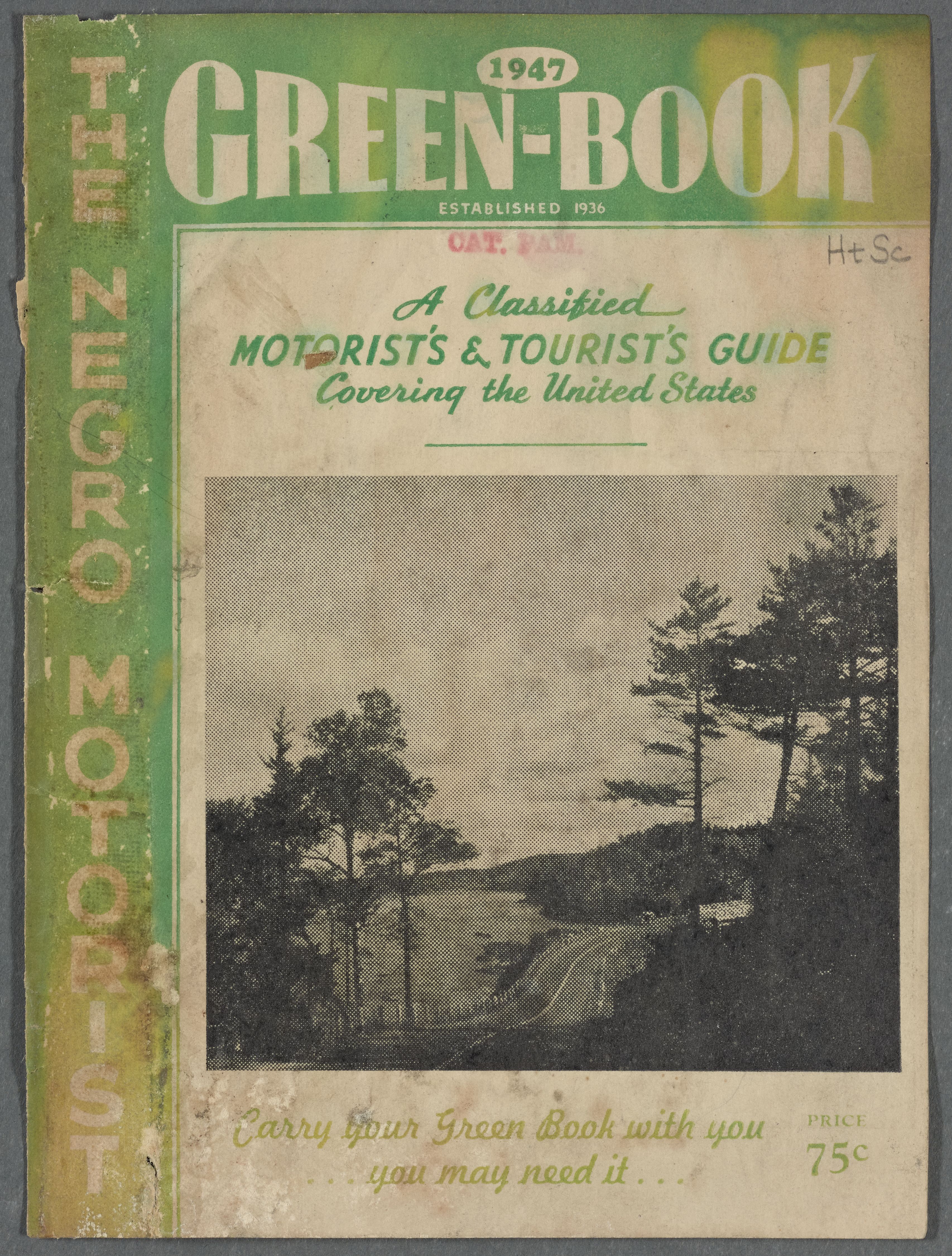
THE 1948 EDITION.
The Negro Motorist Green Book · 1948 Edition · 75¢
The Green Header
The forest green band at the top became the publication's signature. It appeared on every edition, a signal, instantly recognizable across the country, that what you held in your hands was safe information.
The Illustration
A Black couple, luggage in hand, mid-journey. The illustration is aspirational, these are people moving through America with dignity and purpose. The image insists on normalcy in a country that refused it.
75 Cents
The price, 75 cents in 1948, was accessible by design. Victor Green wanted every Black family to be able to afford the guide, not just the wealthy. Safety was not a luxury.
"A Classified Guide"
The subtitle is precise: classified, motorist, tourist. Green was speaking to a generation discovering car travel, and discovering how hostile American roads could be without the right information.
Advertisement
The Origin
VICTOR
HUGO
GREEN.
Harlem, New York · 1892–1960
Victor Hugo Green was a postal worker. He knew every street in Harlem. He also knew what it felt like to pull into a town and not know where you could stop, what hotel would take you, what restaurant would serve you, what gas station wouldn't turn you away.
In 1936, he published a pamphlet. Sixteen pages. New York only. He called it The Negro Motorist Green Book. It listed the places where Black Americans could exist, fully, safely, without humiliation.
He was not a publisher. He was not wealthy. He was a man who saw a problem and decided the solution was a list.
Victor Hugo Green · 1948 Edition
“There will be a day sometime in the near future when this guide will not have to be published. That is when we as a race will have equal opportunities and privileges in the United States.”
Beauty & The Directory
THE BEAUTY PARLOR
WAS ALWAYS FIRST.
In every edition of the Green Book, beauty parlors and barber shops appear before almost anything else. They were among the first businesses listed and the last to be removed. This was not a coincidence.
Black beauty spaces during Jim Crow were sanctuaries. They were places where you could be your whole self, where no one could turn you away, where your hair was understood, where the news of the community traveled. They were political meeting rooms disguised as salons.
The Green Book made them findable. It told you: here is a woman who will do your hair in this city where you do not know anyone. Here is a place where you are safe.
Beauty Parlors
Listed in every edition from 1936 to 1966
Barber Shops
One of the three original categories in the first edition
Hotels
Often the most difficult category, many cities had none
Restaurants
Sit-down dining was the front line of desegregation battles
Service Stations
Essential for road travel, turning away Black motorists was common
Night Clubs
Culture and safety, listed side by side
30 Years
A TIMELINE.
1936
A Postal Worker Has an Idea
Victor Hugo Green, a Harlem postal worker, publishes the first edition of The Negro Motorist Green Book from his home. It lists 16 pages of safe businesses in the New York area. His motto: "Travel without embarrassment."
1937–1940
Word Spreads
The guide expands to cover hotels, beauty parlors, barber shops, restaurants, and service stations across the Northeast. Esso (Standard Oil) becomes a distribution partner, the first national corporation to help circulate a Black publication.
1941
Going National
The Green Book covers all 48 states. Black Americans from coast to coast rely on it to find safe places to sleep, eat, and be seen. Sundown towns, municipalities that enforced exclusion of Black residents after dark, make the guide essential for survival.
1947
The Beauty Parlor Issue
Beauty parlors and barber shops are among the most consistently listed categories in every edition. Black beauty spaces are not just businesses, they are safe houses, community councils, and political sanctuaries. The Green Book makes them findable.
1952
Two Million Readers
At its peak, the Green Book reaches an estimated two million readers annually. It is available at Esso stations, through the mail, and at Black-owned businesses across the country. International editions begin covering travel in the Caribbean, Mexico, and Europe.
1960
The Movement Years
As the Civil Rights Movement intensifies, the Green Book becomes a lifeline for activists traveling the South. The listings are not just convenience, they are safety intelligence. Many listed businesses are also Movement meeting points.
1964
The Civil Rights Act
The Civil Rights Act of 1964 legally prohibits racial discrimination in public accommodations. Victor Hugo Green writes in the final edition that he hopes the day will come when the guide is no longer necessary. He dies the same year.
1966
The Last Edition
The final edition of the Green Book is published. After 30 years and hundreds of editions, the guide goes silent, not because discrimination ended, but because the legal framework had changed. The directory is complete. The work continues.
The Legacy
WE CARRY
THE TORCH.
Beauty Mkt is not the Green Book. The dangers are different. The stakes are different. Black Americans are not navigating sundown towns to find somewhere safe to sleep.
But the act of making a list, of saying here are the people who built something, here are the brands worth finding, here is where your money should go, that act is the same one Victor Hugo Green performed in 1936.
A directory is not neutral. It is a decision about what matters. We have made ours.
Open the Directory →30 years
The Green Book ran from 1936 to 1966, three decades of mapping Black safe spaces in America.
#1 category
Beauty parlors and barber shops were among the most listed businesses in every edition.
2M readers
At its peak, two million Americans depended on the guide to travel, shop, and exist safely.
2025
Beauty Mkt publishes a new kind of directory, not for survival, but for solidarity.
Learn More
FURTHER READING
schomburg.nypl.org
The New York Public Library Digital Collection
The NYPL has digitized every edition of the Green Book. Read them for free.
Read More →Book · 2020
Candacy Taylor, Overground Railroad
A comprehensive account of the Green Book's history and the roads it mapped.
Read More →Investopedia
What Is the Green Book?
How the Green Book connects to finance, the Federal Reserve, Blue Books, and Beige Books.
Read More →Est. 2025 · Beauty Mkt
IN THE SPIRIT
OF THE
GREEN BOOK.
Victor Hugo Green built a list so Black Americans could move through the world with dignity. We build ours so they can build within it.